Financial Consulting
75More than 23 754 Issued Cards
Our bank is an acknowledged leader in credit card distribution. We issue more than 5000 cards every year.
Up to 30% Cashback
We offer an amazing amount of cashback for payments made with one of our credit cards - Blue, Green, or Orange.
Up to 25% for Deposits
Prosperity offers various deposits in all international currencies with interest rate up to 25% for all regular clients.
The Best Banking Choice
Since our foundation, we have been #1 banking institution for lots of individual and corporate customers, both in the USA and internationally. We provide our clients with a number of benefits.
Various Locations
We have offices in many countries including the USA and the UK.
Mobile Banking Apps
Get instant access to your account on any device using our banking apps.
Family & Friends Programs
Our Bank has special programs with benefits for family members.
24/7 Support
Our Support team is always ready to help you solve any banking issues.
Personal Profile
Register your free personal profile online to begin using our services.
Settings
Registered clients can edit the banking account settings in 2 clicks.
A Few Words About Our Bank
Prosperity was founded in 1999 to introduce the new level of financial services worldwide. We are still dedicated to the success of our clients, both individual and corporate.

At Prosperity, we are guided by a common purpose to help make financial lives better by connecting clients and communities to the resource they need to be successful. We are driving growth – helping to create jobs, develop communities, foster economic mobility and address society’s biggest challenges – while managing risk and providing a return to our clients and our shareholders.
Online Reporting
50Financial Statistics
At Prosperity, we aim to provide top quality banking services to a greater number of individual and corporate customers than any other bank in the USA or abroad. Our clients value data privacy and security of their banking accounts 24/7.
With the development of online banking, our number of customers increased up to 6 million worldwide.
Testimonials
I choose Prosperity because I know they share my values of putting community first. Not only do they make banking easy, I see them out volunteering and investing in our community.
When I needed financial assistance to expand my shop, I went directly to Prosperity. Securing financing helped us renovate and expand my jewelry shop and attract more clients.
I choose Prosperity because I know they share my values of putting community first. Not only do they make banking easy, I see them out volunteering and investing in our community.
When I needed financial assistance to expand my shop, I went directly to Prosperity. Securing financing helped us renovate and expand my jewelry shop and attract more clients.
I choose Prosperity because I know they share my values of putting community first. Not only do they make banking easy, I see them out volunteering and investing in our community.
When I needed financial assistance to expand my shop, I went directly to Prosperity. Securing financing helped us renovate and expand my jewelry shop and attract more clients.
How to Order a New Card
Choose Your Bank Card Now!
Frequently Asked Questions
What is the currency amount for the Blue Card?
The minimum amount that can be loaded on the card is $100 or equivalent amount in other currency. The maximum amount would be as per Prosperity guidelines applicable from time to time. You can learn more about it by contacting our consultants using the form on our website or by calling us directly.
What steps do I take if my card gets lost?
If you lose your card please immediately contact our customer support center so that we could issue a new one as fast as possible.
Do I have to maintain any minimum balance?
It depends on the card you choose. For example, if you pick an Orange Card, you get a special waiver on the minimum balance requirement.
What security features does the mobile banking have?
Mobile browser-based banking is very similar to PC based internet banking. The respective mobile handset browser replaces a PC browser to access the banking services. Some of the important security measures in place are 128 bit SSL from VeriSign, https:// based access etc.
What kind of browser do I need for online banking?
Our Banking System supports all browsers. Some of the most popular ones are Chrome, Opera, Firefox, and Safari. If you are using Internet Explorer make sure the version of your browser is 9.0 or higher.
Can I make online payments to foreign recipients?
Yes, you can! Our bank does not limit any payments to a certain country so whether you are using our online banking system or an app for your device, you can safely transfer any amount of money or purchase services and products.
Latest Blog Posts

7 Banking Services That Can Save Retirees Money
Long gone are the days in which you need to visit a branch to do your banking. Today, banks offer an array of services...
2 days ago

Stocks Could Surge Another 10% Between Now And 2018, Financial Experts Say
Experts point out that the next couple of months could become bumpy as the markets deal with uncertainty over factors such as tax reform, which is...
2 days ago

Wall Street Analysts Are Nailing It This Year
Wall Street analysts have made the right calls so far this year. Analysts' 50 most loved stocks at the start of the year are...
2 days ago

Cash Faces a New Challenger in Zelle, a Mobile Banking Service
After six years of laying a foundation, major banks are ready to introduce Zelle, a digital...
2 days ago
Pricing
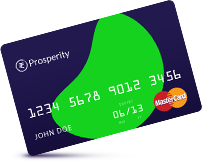
Basic
This option is perfect if you have no experience in online banking but would like to have a card for all kinds of payments in selected currencies.
Free
Order a Card
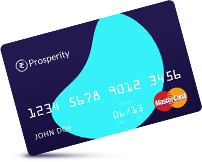
Standard
This offer provides you with extended support for your financial needs and is able to cover the needs of individual and business clients.
$99.00/mo
Order a Card
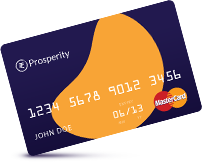
Premium
This card from Prosperity proved to be a great financial solution for big companies and international enterprises worldwide.
$199.00/mo
Order a Card